
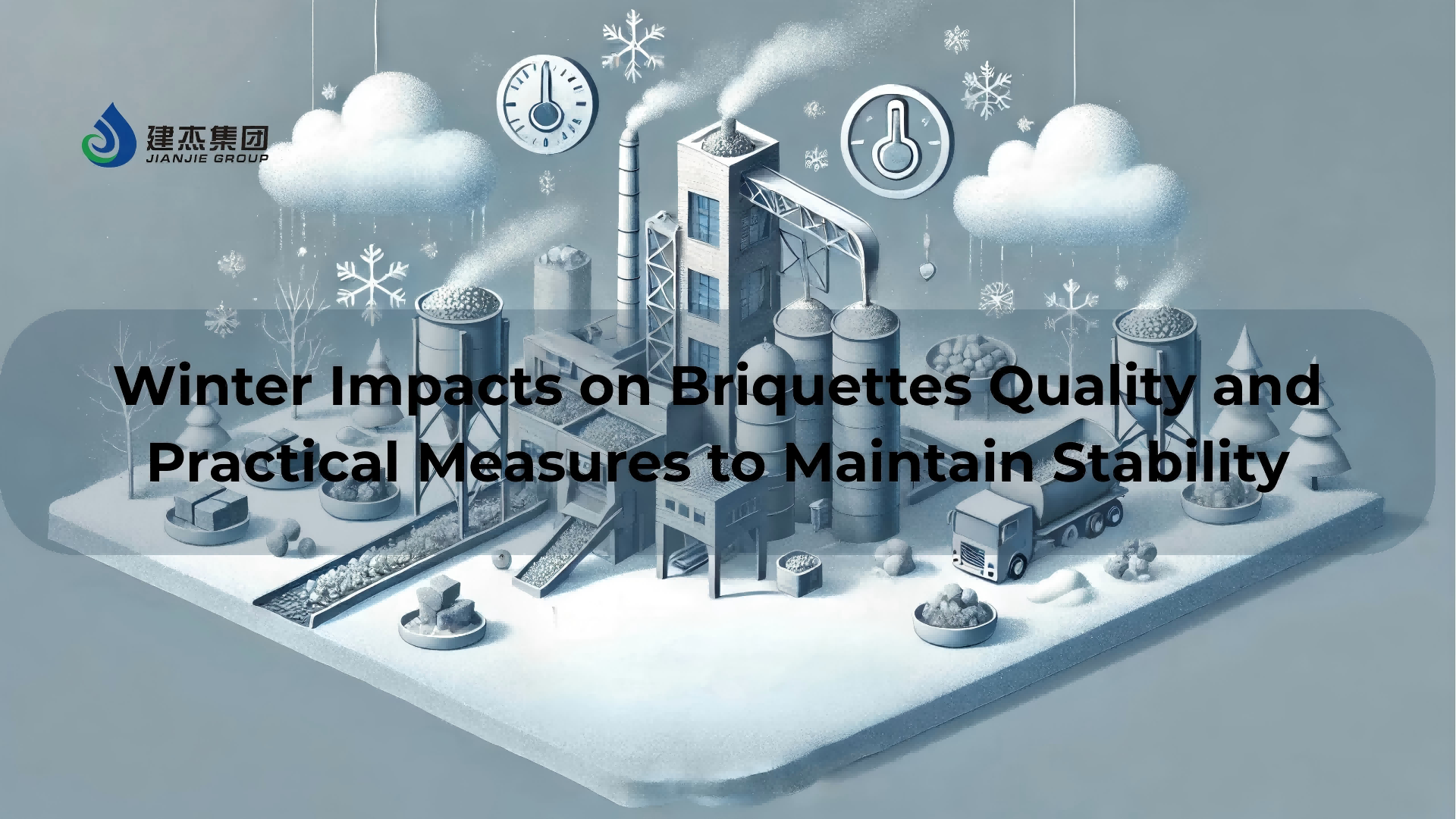
Cold briquetting is a key technology for achieving efficient resource utilization in metallurgy, mining and related industries. Yet when winter arrives, many plants begin to see familiar problems: lower briquettes strength, higher fines, and more visible cracking.
Although cold briquetting does not rely on heat for shaping, low temperatures can still significantly affect the material behavior and the overall forming process. These fluctuations often come from the changes in temperature and humidity during winter, which interfere with the briquetting process in a systemic way.

This article outlines the key ways winter conditions influence briquetting formation and offers a set of practical, field-tested measures to help your plant maintain stable briquette quality throughout the winter season.
3 Key Impacts on Briquettes Quality in Winter
Winter presents multiple challenges to cold briquetting, but three impacts are most critical. Low temperatures affect raw materials and powder binders, winter humidity complicates moisture control, and equipment plus on-site conditions add operational difficulties.
The following sections will examine these impacts and outline practical measures for stable briquette quality.
Impact 1: Winter Weakens Raw Material Behavior and Binder Activation
Winter conditions affect not only the temperature of raw materials but also the way binders interact with moisture and how the entire mixing process behaves. These changes occur at the same time and create a chain reaction that directly influences briquette strength, density, and stability.
| Winter Condition Affecting Raw Materials & Binder | Impact on briquetting process | Impact on Briquette Strength & Quality |
| Temperature of raw material is lower than in the warm days | Slower wetting and weaker particle adhesion | More cracks, weak internal structure, higher fines |
| Slower activation of binders | Reduced water absorption, limited swelling and delayed bonding | Lower compacts strength, powdery surfaces, unstable density |
| Reduced powder binder flowability | Higher mixing resistance and uneven binder distribution | Wet lumps, dry pockets, inconsistent briquette structure |
| Cold mixing water | Binder hydration and activation occur more slowly | Higher binder usage with limited improvement |
| Temperature drop during conveying | Material cools quickly before entering the briquetting machine | Pressure fluctuation and unstable compaction behavior |
Impact 2: Winter Humidity Fluctuations Disrupt Moisture Balance in Briquetting
Humidity varies dramatically across regions in winter, and these differences directly influence material moisture and briquetting stability.
1. Dry Regions: Faster moisture loss, leading to under-moisturized raw mix
low humidity and indoor heating accelerate water loss.
This results in:
- Difficult shaping
- Dry and brittle briquettes
- Weak briquettes surface cohesion
2. Humid Regions: Increased Moisture Absorption and Material Caking
Areas with humid winters experience:
- Raw material moisture pickup
- Local caking or agglomeration
- Wet lumps in the mixer
- Cracking or unstable density after briquetting

Broken briquettes
3. The optimal moisture range for Briquetting Is Narrow
For most briquetting materials, even small moisture deviations can significantly affect briquettes forming quality.
Winter humidity fluctuations can easily push the moisture content outside this range, leading to briquettes strength variations and structural inconsistencies.
Impact 3: Winter Conditions Reduce Equipment Efficiency and On-Site Stability
Winter affects not only raw materials and binders but also briquetting machine and the on-site environment.
1. Lubrication Systems Become Less Efficient
Low temperatures increase lubricant viscosity, causing:
- Higher roller resistance
- Reduced compaction efficiency
- Less consistent briquette density
2. Heat Loss During Conveying Becomes Faster
Even if mixing temperature is controlled, material can cool quickly during conveying, altering feed conditions right before briquetting.
3. Raw Material Silos May Experience Caking or Poor Flowability
Temperature and humidity variation may cause:
- Wall build-up
Powder can stick to the silo walls in cold or humid conditions, forming compacted layers that block or slow discharge.
- Localized freezing
- Irregular discharge
In summary, winter low temperatures systematically affect briquette strength, density, and overall quality by slowing binder activation, reducing raw material wetting, and impacting the drying process.
Understanding these challenges allows us to implement targeted measures to maintain stable briquettes production during the winter season.
6 Practical Measures to Maintain Stable Briquettes Quality in Winter
The following 6 key actions, refined by Jianjie through years of on-site practical experience, serve as a valuable reference for ensuring stable briquette quality in winter
1. Slightly Increase Raw Material Temperature
Even a small temperature increase significantly improves the wetting speed and activation efficiency of binders.
This provides sufficient “startup thermal energy” for the entire binding reaction, ensuring effective bonding is completed before briquetting.
2. Store and Handle Binder at Room Temperature
Avoid binder exposure to cold air to ensure powder binder flowability, dispersibility and hydration performance.
3. Set Independent Winter Moisture Control Parameters
Establish a dedicated moisture guideline for winter instead of reusing settings from warmer seasons. Adjust and recalibrate the optimal moisture content based on local temperature and humidity changes, making real-time corrections through equipment such as dryers or online moisture meters to maintain stable briquetting performance.

4. Optimize Mixing Process Conditions
Adjust mixing process time or water addition sequence. Low temperatures delay the binder activation reaction. By appropriately extending the mixing time or adopting a staged water addition/adjusting the water point sequence, you can effectively compensate for low-temperature activation delays, ensuring the mix reaches a uniform and ideal plastic state.
5. Inspect and Optimize Briquetting Machine Lubrication
Good lubrication ensures stable pressure and briquette density under low-temperature operation.
6. Implement Insulation or Covering During Material Conveying
Cover conveyor belts and hoppers to reduce heat loss. Even if the mix reaches the ideal temperature, it can cool quickly during conveying. Insulation or covering helps maintain a consistent material temperature before briquetting, which is essential for stable compaction.
Beyond Strategy: Leveraging Jianjie’s Advanced Binder for Briquettes Production
While implementing process controls is crucial, the choice of binder material plays a decisive role in mitigating cold weather risks. Unlike many liquid binders on the market, Jianjie binders are supplied in a consistent powder form. This fundamental difference significantly enhances ease of handling and operational stability in cold winter environments.

Jianjie’s advanced binder formula is specifically designed to overcome the systemic challenges detailed in this article:
| Jianjie Binder Advantage | Connection to Winter Challenges | Concise Core Benefit |
| Ensures uniform mixing without clumping | Addresses Reduced Powder Flowability and Humid Region Caking | Improves dispersibility and flowability, reducing damp clumps and dry pockets for more consistent briquette structure. |
| Effectively prevents disintegration and powdering | Reduces Low briquettes Strength and High Fines caused by slower bonding | Strong adhesion at low temperatures, protects briquettes during transport |
| Delivers consistent and stable quality batch after batch | Mitigates Unstable Briquette Quality due to seasonal shifts | Stable composition ensures predictable performance |
| Requires lower dosage | Offsets the need for Higher Binder Usage often seen in cold weather | High binding efficiency reduces winter binder consumption |
Comprehensive Support: Your Partner in Winter Briquetting
Successfully navigating winter briquetting necessitates not only superior products but also dedicated, full-spectrum technical guidance to ensure briquettes production continuity.

Jianjie’s on-site technical support in Mongolia
Jianjie’s technical team is prepared to deliver on-site consultation and customized, engineered adjustments, guaranteeing your briquetting process maintain smooth, efficient, and consistent performance throughout the cold season.
Conclusion: Ensuring Briquettes Quality Efficiency through Scientific Management
Successful winter cold briquetting demands a shift from simple “experiential adjustments” to refined scientific management, addressing system-wide factors from temperature to humidity. Leveraging our deep technical expertise, Jianjie is committed to providing customized solutions and professional powder binders that ensure sustained stability and efficiency throughout the cold months.
We invite you to contact our technical support team today to receive your exclusive winter briquettes production optimization and upgrade plan.

 English
  Arabic
  Chinese
  Russian
  Indonesian