
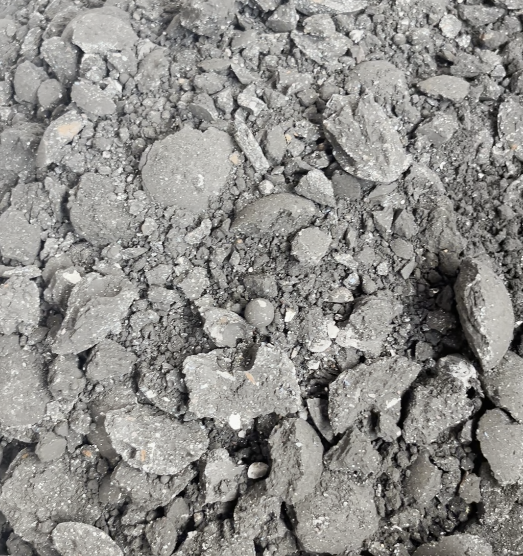
Fragile briquettes that easily crumble or crack during the process of briquetting, storage, transporting, moving. This is a common problem faced by many briquette producers. Why does this happen? What defines a high-quality briquette? And most importantly: how can you improve it?
In this guide, we’ll explore several things:
- Common Briquetting Issues and Causes Behind
- The key factors that affect briquette quality
- How to strengthen your briquettes through process optimization
- Methods for evaluating cold briquette performance
- Tips to improve your briquetting efficiency
Whether you’re working with غبار الفولاذ, coke breeze, or mineral fines, hope this article will help you understand more about how to create durable, high-performance briquettes using effective binder and process strategies.
Common Briquetting Issues and The Reasons
Before improving briquette quality, it’s essential to understand what can go wrong. Have you ever met such issues in your briquetting work? The following section outlines typical problems encountered in cold briquetting and the possible reasons behind them.

Broken Briquettes
❓ Issue 1: My briquettes are too fragile or break easily
Reasons:
- Not enough binder dosage or the binder can’t hold the powder well: Without enough or proper binder, particles fail to bond effectively.
- Raw materials have improper particle size distribution (too coarse or too fine): Large particles or uneven size reduce contact points, weakening the structure.
- The pressure of briquetting is not enough or the pressing time is too short: Inadequate pressure leaves the briquette under-densified and structurally weak.
- Contains content like CaO, raw materials that contain CaO may disintegrates.
- Uneven binder distribution: Poor mixing causes inconsistent internal strength and weak points within the briquette.
❓ Issue 2: My briquettes breaks during the fall test
Reasons:
- Binder is not well mixed with raw material: Incomplete mixing of binder and material results in low impact resistance.
- Low internal density: too loose structure make briquettes vulnerable to physical shock.
- Uneven surface drying: When the outer layer dries too fast, it hardens prematurely, trapping soft material inside and causing the inside left undried.
❓ Issue 3: My briquettes crack or fall apart after drying
Reasons:
- Moisture content is too high before drying: Excess moisture leads to shrinkage and cracking during drying.
- Drying process is too fast or uneven, leading to surface cracks since the inside of the briquettes are still wet.
- Binder and raw materials are not properly mixed: Insufficient dispersion weakens structural integrity during water loss.
- Incorrect water-to-binder ratio: Too much or too little water disrupts the binder’s performance during curing.
❓ Issue 4: My briquettes collapse or disintegrate at high temperatures
Reasons:
- Binder can’t resist high temperature (lacks thermal stability): Some binders decompose or melt under high heat, weakening the briquette’s strength.
- Residual moisture not fully removed: Trapped water in briquettes expands at high temperatures and causes internal disintegrate.
- Low density or internal porosity: Gaps inside the briquette reduce thermal endurance.
- Binder-material chemical incompatibility: There might be reactions between binder and raw materials, which can compromise structure under heat.
❓ Issue 5: Forming rate is low or briquettes stick to the roller/mold
Reasons:
- Incorrect water level (too high or too low): Optimal moisture ensures flowability and clean mold release.
- Unsuitable pressing parameters: Low or uneven pressing pressure leads to incomplete shaping and sticking.
❓ Problem 6: Briquettes vary in size or density
Reasons:
- Inconsistent feeding rate: Uneven volume of the feedstock at a time leads to non-uniform briquette shapes.
- Uncalibrated equipment settings: Without correct machine calibration, pressure and shaping become unpredictable, and the size of briquettes will be affected
❓ Problem 7: Excessive fines or powder are generated during transport
Reasons:
- Low abrasion resistance: Weak briquettes wear down easily in motion.
- Binder cannot withstand mechanical stress: Poor binder choices result in weak bonds that fail under handling.
- Poor mixingPoor mixing Without tight compaction, briquettes crumble under pressure or friction.
❓ Problem 8: My Briquettes have impurities or visible layers
Reasons:
- Poor mixing of fine and coarse fractions: Segregation during forming causes surface inconsistency or layers.
- Chemical incompatibility between binder and material: Unstable reactions can cause discoloration or separation.
Identifying the root causes of briquette failure is an essential step toward building a stronger product. With a clear understanding of these problems, producers can now focus on the underlying factors that determine briquette quality.
Why Are Your Briquettes Fragile? Key Factors That Affect Briquette Quality

Raw Materials Stored Outdoor
In cold briquetting, understanding influential factors helps you optimize production, reduce waste, and ensure consistent performance in real-world applications. Below, we break down the 6 major categories that influence briquette quality.
| Type | Factor | Description |
| المواد الخام | Particle Size Distribution | Fine particles improve binder contact and packing, but excessive ultra-fines may cause dustiness and low strength. |
| Moisture Content | Moisture is essential for binder activation, but too much weakens briquette structure. | |
| Impurities | High levels of contaminants (e.g., oil, clay, alkalis) can interfere with binder action and combustion performance. | |
| Chemical composition | Affects binder compatibility, thermal behavior, and post-briquetting applications (e.g., metallurgy or combustion). | |
| Techniques | Mixing technique | Proper mixing (e.g., dual-shaft paddle mixers) ensures even binder distribution and homogeneous feed. |
| Forming sequence | The order of operations (e.g., feeding, pressing, ejection) must be carefully controlled to avoid defects. | |
| Equipments | Briquetting press type | Hydraulic or roller press machines with adjustable pressure are ideal for cold briquetting. |
| Wear condition of molds/dies | Worn molds can produce uneven briquettes and reduce forming efficiency. | |
| Mixer design and speed | Impacts how well binder and material are blended. | |
| Drying systems | Must ensure uniform drying (dry completely) without surface hardening or internal cracks. | |
| Operation | Pressure control | Must be adjusted according to material and binder properties. Inadequate pressure = weak briquettes. |
| Feeding rate | Inconsistent feeding causes size variation and weak points. | |
| Binder dosage control | Needs to be precise—too little leads to poor strength, too much increases cost and affects burning. | |
| Monitoring consistency | Frequent testing of compressive strength, density, and drop resistance ensures production stability. | |
| Measurement | Test methods | Testing methods may vary in different regions and countries. Make sure you get the right criteria. |
| Environment | Humidity | High humidity slows drying and promotes mold or surface softening; low humidity can cause brittle cracking. |
| Storage conditions | Briquettes must be stored in dry, temperature-controlled environments to prevent post-production degradation. | |
| Production Ambient | Wind, rain, temperature will all affect the producion. |
Each step in the briquetting process—from raw material selection to environmental conditions—affects briquette strength. Only by controlling all variables can manufacturers achieve consistently high-quality results.
How to Evaluate Cold Briquette Quality
Once the briquettes are formed, how can you tell whether theyre good enough? Evaluation is critical, especially for transport, storage, and performance in furnaces or kilns.
P.S. The specific pass criteria varies with the standard and requirement in different regions and area. Confirm the requirements for your area before you are doing the test.
Wet Strength Test
Definition of Wet Strength: The mechanical strength of an un-dried briquette (before drying).
| Purpose | Procedure | Pass Criteria |
| Test if the briquettes can maintain the physical constructure and mechanical strength. | Drop a wet briquette from a height of 1.5 meters. | Should not break after 2-3 drops. |
Dry Strength Test
Definition of Dry Strength: The strength of a briquette after drying or curing, when the moisture has evaporated and the binder has set.
| Test Method | Purpose | Procedure | Pass Criteria |
| Compression Strength Test | Measures how much pressure a briquette can withstand. | Use a compression machine | ≥150 N/briquette for industrial use. |
| Drop Test | Assesses impact resistance during handling and transport. | Drop a dried briquette from 2 meters height. | Briquette should remain intact after 2–3 drops. |
Thermal Strength Test
Definition of Thermal Strength: The briquette’s ability to maintain structural integrity under high temperatures, typically during combustion, sintering, or reduction.
| Purpose | Procedure | Pass Criteria |
| Especially for metallurgical applications (e.g. as feedstock in blast furnace/electric arc furnace), briquettes must endure high temperatures without breaking apart prematurely. | Roasting finished briquettes at temperatures between 1000 and 1100℃. | The briquettes don’t crack or disintegrate under the high temperature for more than 30mins. |
These tests offer a comprehensive evaluation framework for briquette quality. Understanding how briquettes perform under each condition helps producers identify weaknesses and make informed improvements.
How to Improve Briquette Strength in Cold Briquetting
Now that you’ve identified the issues and tested briquette performance, it’s time to implement proven strategies to improve strength. The following steps help you optimize materials, equipment, and processes.
Optimize Raw Material Preparation
Control particle size distribution
An optimal mix of fine and coarse particles enhances void filling and improves interlocking. A recommended distribution is: 70% with particle size <1 mm, 25% between 1–3 mmو 5% between 3–5 mm.
Dry raw materials appropriately
Excess moisture weakens bonding during curing. Ensure moisture is within the optimal range.
Pre-drying or moisture conditioning
If your raw materials are too wet, you need to pre-dry or blend with drier additives to reach the desired moisture window.
Use the Right Binder and Dosage
Select a binder designed for cold briquetting
Not all binders are created equal. Use high-strength, low-ash binders that cure at room temperature and resist breakdown in storage and transport. Jianjie’s cold briquetting binders are formulated for this purpose.
Use the Right Binder and Dosage
Under-dosing leads to weak briquettes; over-dosing increases cost and may affect combustion or reactivity. Typical binder usage is 3–5% by weight, depending on the material.
Ensure chemical compatibility
Your binder should be chemically compatible with the raw material. For example, high-pH waste may interfere with acidic binders. Jianjie offers customized binder matching services.
Enhance Mixing Uniformity
Use industrial-grade mixers
Uniform binder distribution is crucial. High-shear mixers or dual-shaft paddle mixers are recommended for larger volumes.
Monitor mixing time and sequence
Add binder solution gradually while mixing to ensure even coverage. Avoid under- or over-mixing, both of which reduce bonding efficiency.
Apply Proper Pressure and Compaction
Use a calibrated briquetting press
A press with adjustable pressure settings ensures the right compaction level for different materials.
Apply enough pressure to activate the binder
Cold briquetting requires sufficient mechanical force to eliminate voids and allow binder to coat particles effectively.
Avoid rebound or spring-back
After compaction, some briquettes may expand slightly if pressure is not held long enough. Choose machines that maintain pressure momentarily before releasing.
Post-Processing Enhancements
Controlled curing or drying
Allow briquettes to completely dry under moderate conditions to achieve full strength. Fast drying can cause surface cracks.
Improving briquette strength requires attention to the entire production chain. By refining raw material handling, binder selection, equipment setup, and drying methods, producers can significantly enhance briquette durability and performance.
Build Stronger Briquettes with Jianjie’s Cold Briquetting Solution
Cold briquetting is more than just compressing fines. It’s a delicate balance of raw material characteristics, binder performance, process parameters, and post-treatment. Achieving durable, high-quality briquettes requires a comprehensive approach, and that’s where Jianjie comes in.
With over 15 years of expertise, Jianjie specializes in high-efficiency cold briquetting solutions. Our proprietary binder is:
- Low in dosage (typically 3–5%)
- High in viscosity for strong bonding
- Resistant to high temperatures
- Compatible with a wide range of raw materials
- And helps reduce bentonite usage while increasing iron content
Whether you’re working with steel dust, coal fines, or mineral residues, our technical team can help you customize the formula, optimize the process, and improve overall briquette strength and consistency.
Let’s strengthen your briquetting process together.
Contact us today for a free evaluation and learn how Jianjie can support your production goals with reliable technology and expert support.


 Arabic
  English
  Chinese
  Russian
  Indonesian