
Introduction: The Critical Role of Binder Selection in DRI Fines Briquetting
Direct Reduced Iron (DRI) fines are valuable metallic by-products produced during DRI processing and handling. However, their fine particle size and poor flowability make direct reuse in the furnace challenging. Briquetting provides an effective solution by converting these fines into high-strength, furnace-ready briquettes.

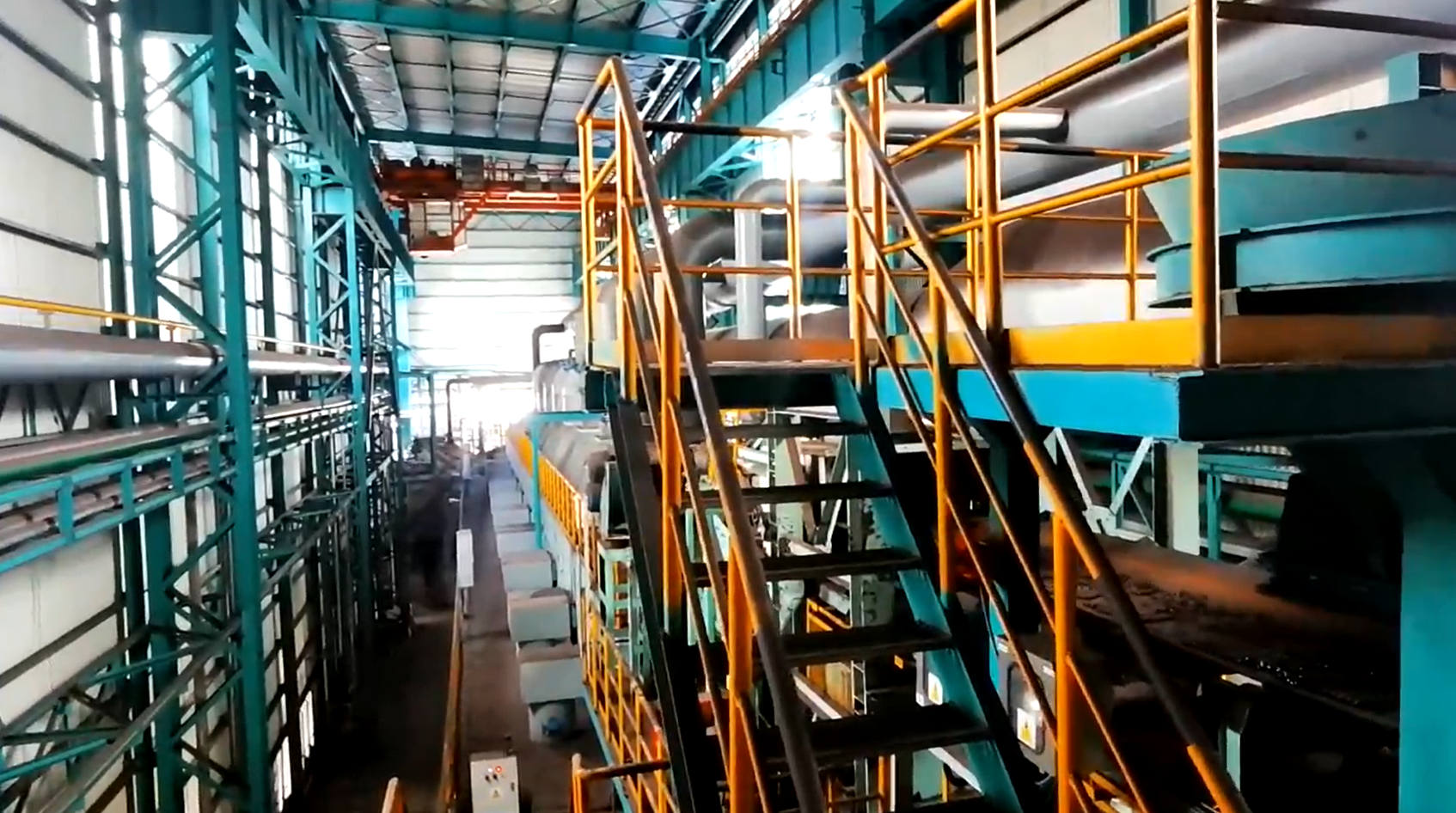
Direct Reduced Iron (DRI)
The binder plays a crucial role in the success of DRI fines briquetting. It determines the briquette’s strength, stability, and metallization rate, directly influencing steelmaking efficiency and production cost. Cement and lime are commonly used binders, but their limitations have become increasingly evident in modern steelmaking.
This guide reviews the shortage of cement and lime, introduces Jianjie’s advanced DRI fines binder, and outlines its applicable materials.
Conventional DRI fines briquetting Binders: Cement and Lime Under Review
For decades, cement and lime have been the primary binders used in DRI fines briquetting. Their popularity stems from easy availability, low price, and basic bonding ability.
However, when applied to iron-based raw materials like DRI fines, both show significant technical and operational drawbacks that limit their effectiveness in modern metallurgical processes.
| Binder Type | Advantages | Limitations in DRI Briquetting |
| Cement | • Readily available • Provides good cold strength • Easy to mix and handle | • High impurity content increases slag volume and lowers metal yield • Reduces metallization efficiency during reduction • Raises energy consumption due to extra oxide removal |
| Lime (CaO) | • Provides some binding effect • Can help control sulfur and phosphorus | • Highly reactive with water — DRI fines heat up and disintegrate upon moisture contact • Prone to swelling and cracking during storage • Alters furnace slag basicity, causing unstable operation |
While both cement and lime can produce acceptable strength at room temperature, their high impurity content, reactivity, and poor moisture resistance make them unsuitable for the demanding conditions of DRI powder briquetting.
To better understand why new binder solutions are necessary, it is important to look at the inherent challenges of DRI fines cold briquetting.
Common Challenges in DRI Fines Briquetting
Cold briquetting of DRI fines presents several unique technical challenges compared with other iron-bearing materials. DRI has a highly porous structure and strong chemical activity, which make it difficult to handle and compact effectively.
Key difficulties in DRI fines briquetting include:
High reactivity with moisture
When exposed to water or humidity, DRI fines can oxidize rapidly and release heat, leading to briquette cracking or disintegration.
Fine particle size
DRI powder particles are extremely small, resulting in poor flowability and low green strength during briquetting.
Surface oxidation
Even slight oxidation can weaken interparticle bonding, reducing briquette strength and metallization quality.
Safety concerns
Improper handling during mixing or curing may cause temperature rise or spontaneous ignition.
These challenges mean that DRI powder briquetting requires a binder with exceptional stability, low impurity content, and strong bonding performance. It must ensure both safety and high mechanical strength while maintaining good reduction efficiency.
These requirements have driven the shift toward advanced organic binders that can deliver both strength and purity under industrial conditions.

DRI Fines Briquettes
Organic Binders in DRI Fines Briquetting
As the limitations of cement and lime become increasingly evident, more and more steel producers are adopting organic and composite binder systems. These advanced binders are specifically designed for DRI fines briquetting, offering high bonding strength, high purity, and stable reduction performance.
Compared with cement and lime, organic binder systems offer several advantages:
- Lower impurity content, reducing the burden on furnace slag;
- Reduced dosage requirements, maintaining consistent performance under both ambient and high-temperature conditions;
- Cleaner composition and stronger adhesion, improving briquette strength and energy efficiency.
By achieving a balance of strength, purity, and stability, organic binder technology is redefining the standards for DRI fines briquetting and guiding steel production toward cleaner and more efficient operations.
Jianjie Binder for DRI Fines: Designed for briquetting Performance
Building on this technological progress, Jianjie’s Binder for Briquetting Direct Reduced Iron (DRI) Fines provides a cleaner, stronger, and more stable alternative to cement and lime. It is specifically engineered for iron-based solid wastes, enabling safe and efficient recycling in modern steel production.
Applicable materials include:
- Direct Reduced Iron (DRI) fines
- Iron powder
- Mill scale
- Sinter return fines
- Ore slag
Its versatile performance allows steel plants to handle multiple waste streams with one unified briquetting solution , simplifying production, improving material recovery, and reducing overall operational costs.

Jianjie binder for DRI fines briquetting
Why Choose Jianjie’s DRI Fines Briquetting Binder
Durable and Cost-Effective Briquettes
Jianjie’s binder forms a dense interparticle network, providing exceptional cold and hot strength and high forming rates (up to 98%) in industrial applications. briquettes resist impact, compression, and disintegration, maintaining integrity during drying, handling, and furnace charging. With its high performance at low dosage, the binder reduces material consumption and overall production costs, offering a reliable and economical solution for steel plants.
Customized Formulation
Recognizing that every steel mill has its own raw material characteristics and process conditions, Jianjie provides tailored binder solutions based on detailed assessments of particle size, chemistry, and moisture content.
Our goal is to help each client achieve optimal DRI fines briquette quality with maximum cost efficiency.
Environmentally Friendly and Safe
Jianjie’s DRI fines binder is formulated to minimize dust emission and residual impurities during briquetting and reduction. This reduces environmental impact and improves workplace safety for operators, supporting cleaner and healthier steelmaking operation.
Conclusion: Choosing Efficiency, Stability, and Value
The era of conventional cement and lime binders is gradually giving way to cleaner, more efficient solutions. Jianjie’s DRI fines binder represents this evolution in briquetting technology, offering a balance of strength, purity, and cost efficiency.
For steel plants exploring cleaner briquetting solutions, Jianjie offers specialized technical expertise and customized formulations.
Please contact our technical team for tailored support and consultation regarding DRI fines briquetting.
FAQ about DRI fines briquetting
Q: What is DRI fines briquetting, and why is it important?
A: DRI fines briquetting is the process of compacting Direct Reduced Iron (DRI) powder into dense, solid briquettes for reuse in steelmaking. It prevents material loss, improves furnace efficiency, and supports circular economy practices in steel plants. Using the right binder is key to achieving strong, safe, and metallizable briquettes.
Q: Why are cement and lime not ideal for DRI fines briquetting?
While cement and lime have been widely used, they introduce impurities such as silica and calcium oxides that increase slag formation and reduce metallization. Their high reactivity with moisture also causes briquette cracking or disintegration. These drawbacks make them unsuitable for modern DRI briquetting processes.
Q: How does Jianjie’s DRI Fines Binder improve briquette performance?
A: Jianjie’s binder creates a dense particle network that ensures high forming rate (up to 98%) and excellent strength under both cold and hot conditions. It prevents disintegration from moisture or heat, reduces energy consumption, and supports stable operation during furnace charging.
Q: Can Jianjie’s binder be customized for different steel plants?
A: Yes. Jianjie provides customized binder formulations based on raw material properties such as particle size, chemical composition, and moisture level. This ensures the binder performs optimally under each plant’s unique operating conditions, improving overall productivity and cost efficiency.


 English
  Arabic
  Chinese
  Russian
  Indonesian