
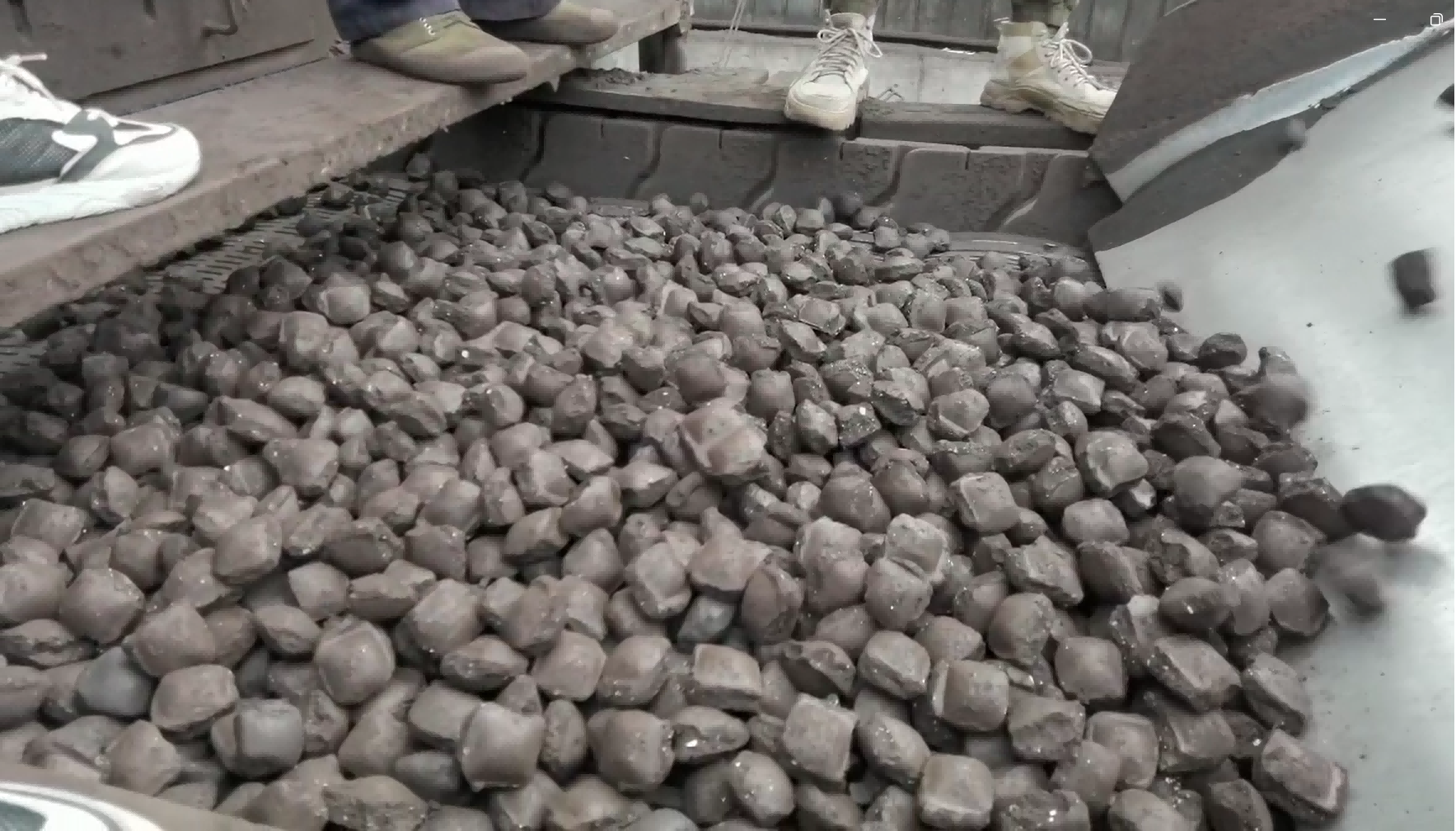
Unlocking Efficiency and Sustainability with Jianjie’s Integrated Approach
Whether in metallurgy, mining, coal processing, or chemical production, industries face the challenge of managing and reusing by-products and ultra-fine materials. Agglomeration methods such as briquetting and pelletizing not only enhance material handling and recycling but also contribute to greener operations. In summary, they have become essential processes across various industries, enabling sustainable reuse of valuable materials and waste by-products.
As a pioneer in this field, Jianjie offers a comprehensive one-stop solution tailored to your specific material characteristics and production goals. We provide not only high-performance binder products—but also end-to-end technical support that ensures success from lab to line. If you are interested in agglomeration and Jianjie, let’s keep reading!
What is Agglomeration?
Agglomeration refers to the process of combining fine particles or powders into larger, more cohesive masses through mechanical, thermal, or chemical means. It is a critical step in many industrial applications where fine raw materials are difficult to handle, transport, or process. Common agglomeration techniques include pelletizing, briquetting, sintering, and granulation.
The primary objectives of agglomeration are to:
- Great for storage and transportation;
- Enhance mechanical strength and thermal stability;
- Reduce dust generation and material losses during handling;
- Enable more uniform reaction behavior in high-temperature or chemical processes.
Agglomeration plays a vital role in industries and fields such as metallurgy, mining, chemical processing, agriculture, and waste recycling, offering both economic and environmental advantages by enabling the reuse of by-products and improving process efficiency.
Pelletizing Vs. Briquetting

Key Challenges in Agglomeration Across Various Industries
Briquetting
Applications of briquetting can vary in different industries. Here are the challenges people may face when using briquetting:
Steel Industry
Use of briquetting in steel industry:
Briquetting is widely used to consolidate steelmaking by-products (e.g., iron-bearing dust like converter dust, mill scale, EAF dust) into high-strength briquettes. These briquettes are returned to blast furnaces, or electric arc furnaces as coolant or slagging remover. Iron and useful mineral contained in these waste can also be recycled, contributing to closed-loop recycling, material cost savings, and compliance with environmental laws.
Challenges:
During the recycling, problems with the raw materials such as impurities that may impact the agglomeration efficiency:
b. Handling of zinc-rich dust or alkaline dust
c. Meeting emission regulations: Tightening environmental regulations across the world demand safer reuse of hazardous dusts, reduced landfill use, and lower emissions during recycling.
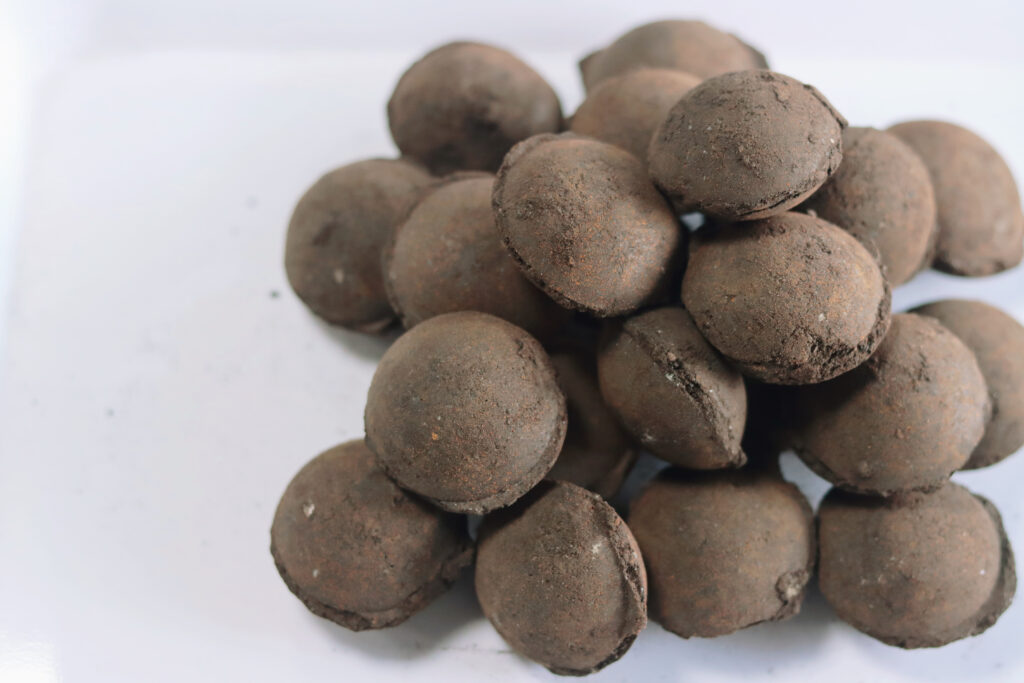
Steel dust briquettes
Mining Industry
Use of briquetting in mining industry:
Forming mineral powder into briquettes before charging them into a blast furnace can improve smelting efficiency and reduce energy consumption. The briquette ore powder exhibits superior thermal stability and weathering resistance, reducing breakage and dust emissions during the ironmaking process, thereby minimizing environmental pollution.
Challenges:
a. Difficulty in briquetting fine ores and tailings
b. Inconsistent briquette strength
c. Furnace compatibility with the raw material
Finer tailings require stronger briquettes to avoid transport loss and ensure recovery.
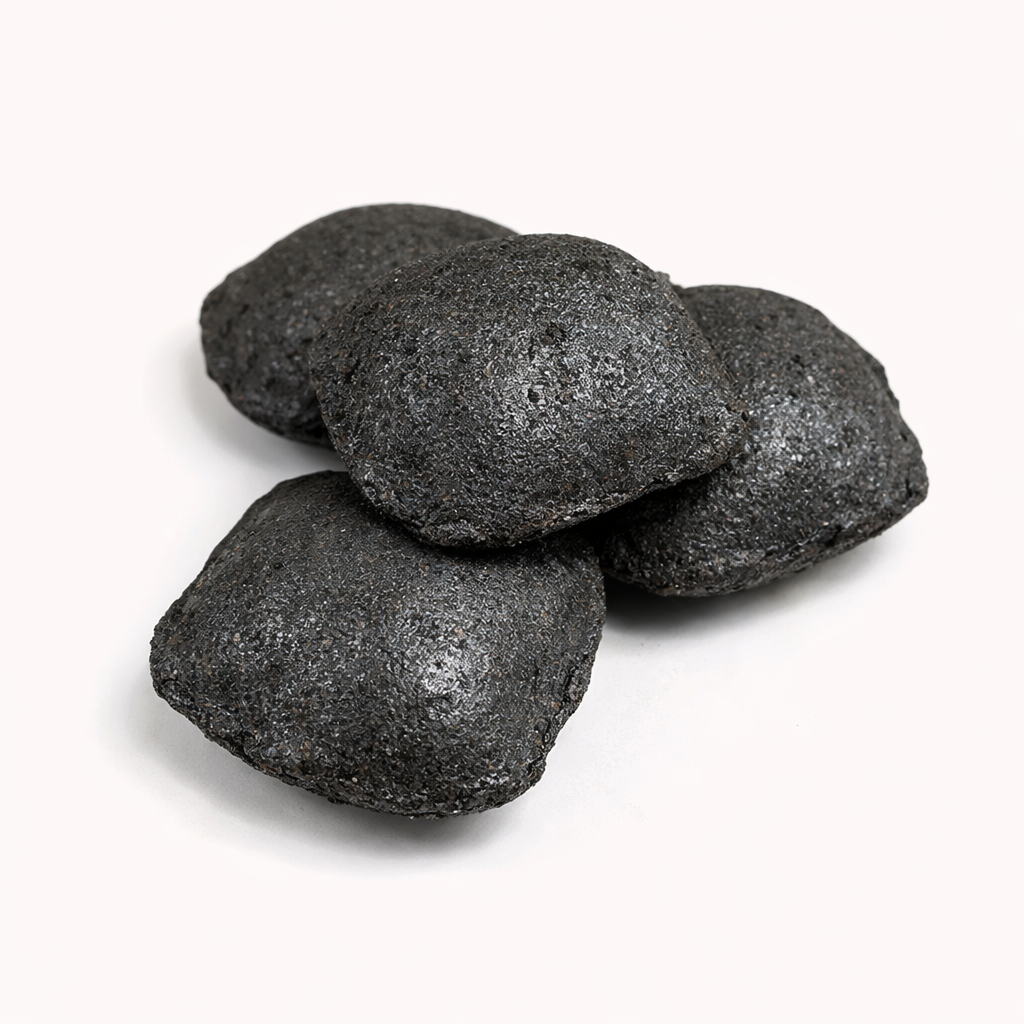
Chrome ore powder briquettes
Coal & Coking Industry
Use of briquetting in coal and coke:
Briquetting transforms low-value powders like coke breeze, coal fines, and char dust into uniform fuel briquettes with higher combustion efficiency and lower emissions, suitable for industrial boilers, heating systems, and even domestic stoves.
Challenges:
a. Low formability of coal powder and coke breeze
b. High ash content and volatile matter
c. Different binder choice for different carbon materials such as anthracite coal, bituminous coal, peat, biochar, and more.
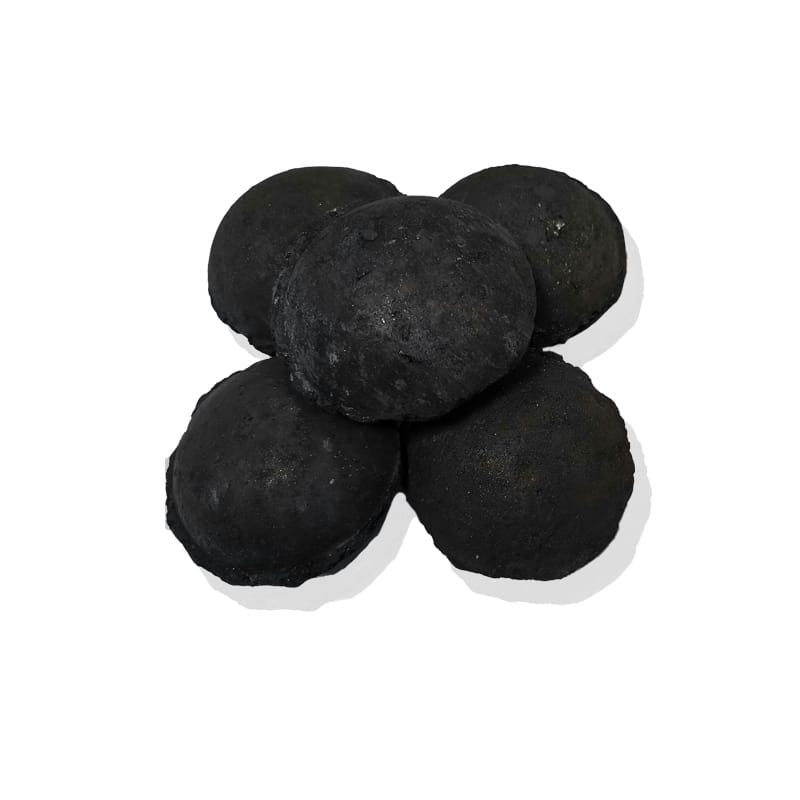
Coal briquettes
Phosphorus Industry
Use of briquetting in Phosphorus:
Phosphorus sludge can be stabilized into briquettes that are easier to transport and recycle, reducing phosphorus loss and improving material reuse efficiency.
Challenges:
a. Disposal challenges for phosphorus sludge
b. Low shaping strength and material recovery
c. Loss in transport due to ultra fine powder
High moisture and poor cohesion weaken pellet strength and increase phosphorus loss.
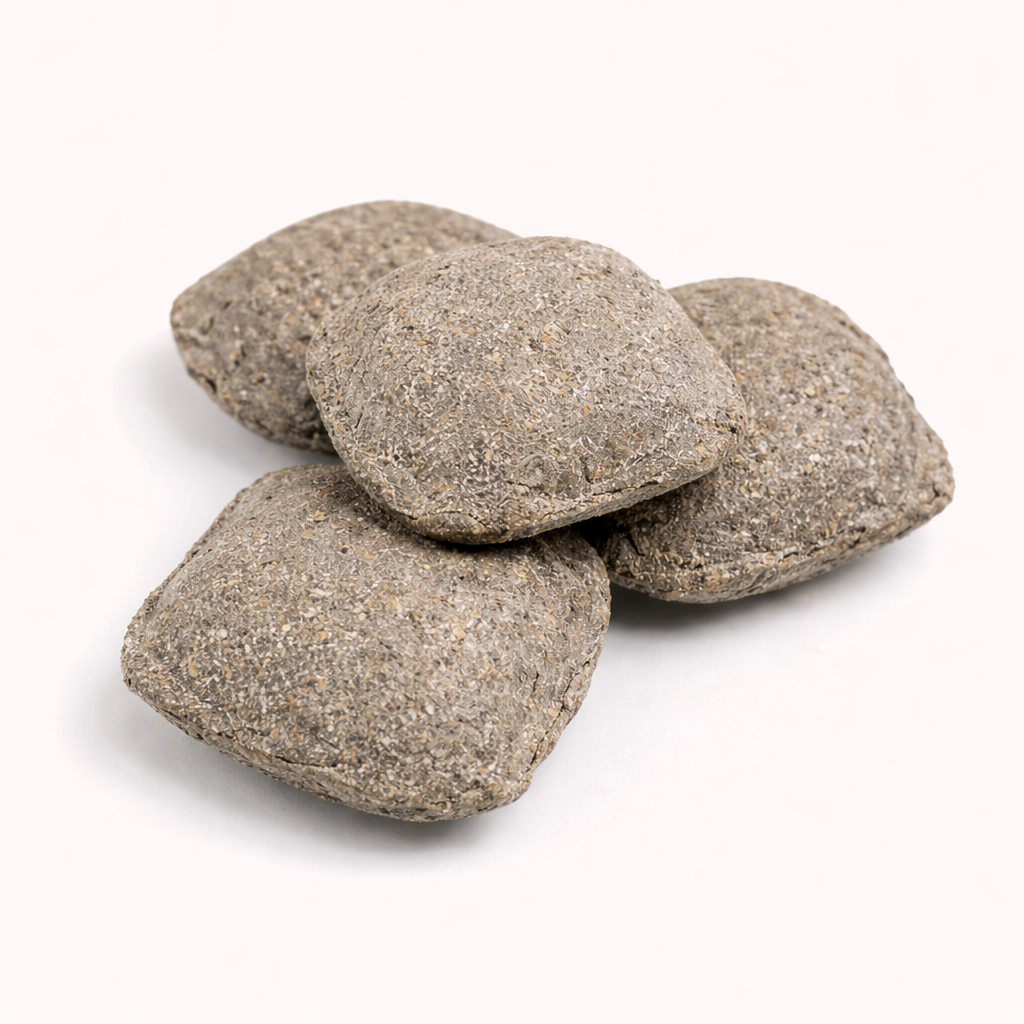
Phosphorus powder briquettes
Red Mud (Bauxite Residue)
Use of briquetting in red mud:
Briquetting allows red mud to be compacted with specialized binders into dense, less reactive forms for potential use in cement kilns, construction materials, or as a neutralized filler, helping reduce environmental risks and storage costs. After magnetic separation and gravity separation to produce iron concentrate, it is cold-pressed into briquettes and then fed into an Electric Arc Furnace as a substitute for scrap steel, serving as a slagging agent and coolant.
Challenges:
a. Highly alkaline materials that are difficult to stabilize or reuse effectively
Its high pH and low bonding require specialized, safe-to-use binder systems.
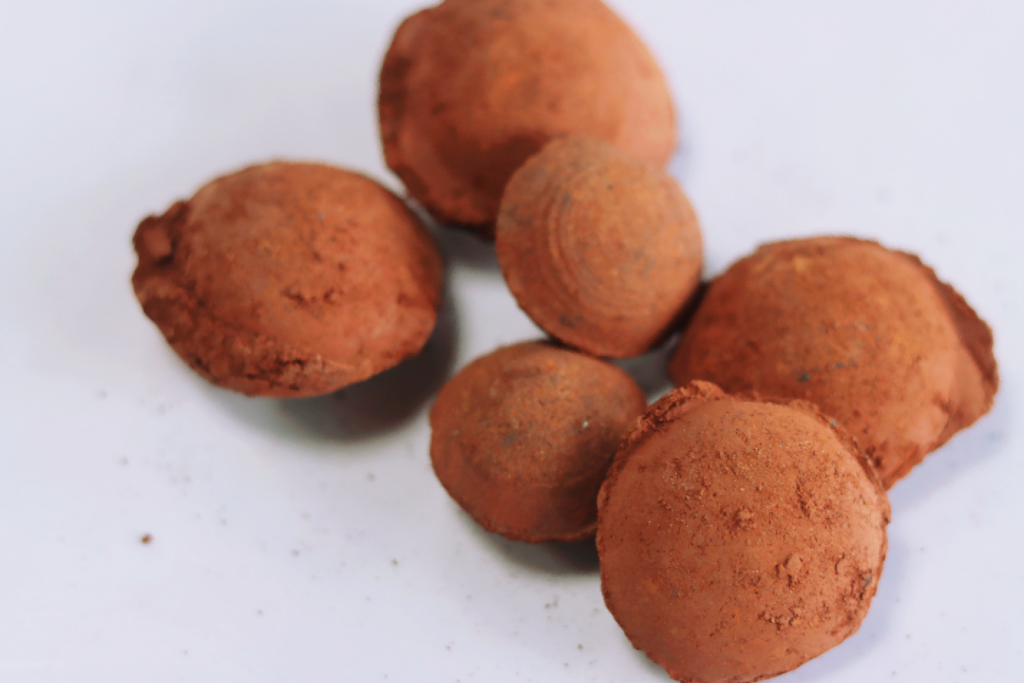
Red mud briquettes
Pelletizing
Use of pelletizating:
Pelletizing, widely used in the mining and metallurgy industries—especially in the production of iron ore pellets—faces several critical challenges.
Challenges:
a. Inconsistent quality of raw materials
varying iron content or particle size that directly affect pellet strength and uniformity
b. Use of traditional binders like bentonite and molasses (sugar-based binders)
high silica content in bentonite introduces impurities into the final pellet product, potentially lowering iron grade and increasing slag volume in blast furnace operations
molasses-based binders, though more environmentally friendly and low in impurities, often suffer from low thermal resistance and can lead to weaker green and dry pellet strength, especially under humid conditions or in processes requiring longer drying times
c. High-temperature processing involved in induration/heating requires substantial energy input
raising concerns about cost and sustainability. Problems, such as high returning rate of pelletizing may increase the energy consumption, can occur.
In all these sectors, one common challenge emerges: the need for customized, high-performance binders that align with process complexity, local regulations, and economic constraints. Jianjie addresses these issues through targeted formulation, deep industry insight, and integrated technical support.
Jianjie’s Five Specialized Binder Series
To address these complex needs, Jianjie has developed patented five major binder series—each fine-tuned for its target application:
1. Steel Plant Series
- Organic/composite binder
- Patented anti-CaO binder
Feedstock (Raw material): for steel dust, mill scale, slag, and zinc/CaO-rich residues
2. Pelletizing Ore Series
- Organic and composite binder
Feedstock (Raw material): iron ore concentrates, magnetite, hematite, limonite, mineral tailings
3. Coal & Coking Series
- Coke binder and coal binder
Feedstock (Raw material): designed for coke breeze and coal fines
4. Phosphorus Series
- Phosphorus binder
Feedstock (Raw material): engineered for phosphate waste and sludge stabilization
5. Mineral Powder Series and Red Mud Series
- Organic/composite binder
Feedstock (Raw material): adaptable for mineral powder such as chrome ore powder, nickel ore powder, manganese ore powder, and red mud bauxite, etc.
Application Performance & Competitive Advantages
Jianjie is trusted by leading companies for:
- High Compressive Strength – Ensures stable briquette quality during transport and storage, prevent breakage.
- Moisture and Heat Resistance – Good wet strength and thermal strength
- Eco-Friendly Formulas – Low emissions, no toxic additives
- Material Compatibility – Designed to work with even the most difficult dusts and sludges
- Cost-Efficiency – High strength at low dosage. Reduced costs with effective performance
Jianjie can help clients conduct rigorous R&D process that includes in-house testing, pilot plant trials, and real-world simulation under industrial conditions. Our goal is to strike a precise balance between binding strength, process compatibility, environmental compliance, and cost control.
Moreover, Jianjie emphasizes green chemistry in all formulations. We avoid the use of harmful heavy metals or high-sulfur components, ensuring that your final briquette product meets modern environmental and health standards.
Comprehensive Technical Support & Services
Instead of a one-size-fits-all approach, Jianjie believes in precision customization and collaborative development.
We support our clients with:
- Material Testing & Analysis (Pilot Testing) – We evaluate your raw material composition, equipment, and preferred result to recommend the ideal binder formulation
- Process Optimization – From lab-scale trials to industrial-scale application, we help streamline your pelletizing/briquetting line
- Custom Formulation Services – If your dust or sludge is unique, so is our solution
- On-site Guidance & Remote Assistance – Our team provides professional technical advice both locally and globally
Free Sample for Production Trial
In addition, Jianjie offers fast-response sample development services. For urgent production needs, we can deliver tailored binder samples very fast for free, accompanied by clear usage instructions and strength test results.
One-on-One Technical Support
We also support remote video inspections and technical discussions, enabling global clients to access our expertise without delay. Whether you’re a local steelmaker or an international mining group, our team is ready to assist.
After-Sales Service
To ensure long-term success, Jianjie also provides follow-up support after implementation—including performance tracking, process adjustments, and training of factory staff. Our goal is not just to sell a product, but to help your operation achieve measurable improvements in stability, recovery rate, and cost-efficiency.
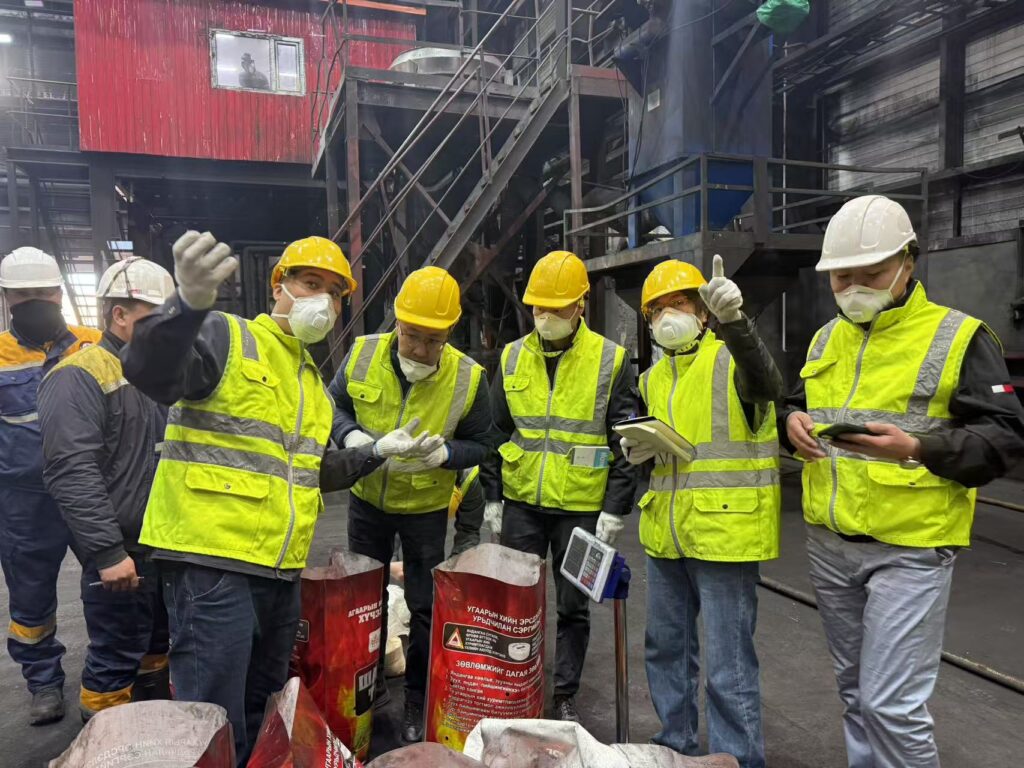
Visit Us
Moreover, if you are interested in visiting us at our office or factory, you are always welcome. Simply book an appointment with our specialist via [email protected].
Let’s Work Together
Jianjie is more than a binder supplier—we are your global expert in agglomeration.
If you’re facing challenges with steel dust, phosphate sludge, red mud reuse and more, we’re ready to help you develop a clean, stable, and cost-efficient solution.
Jianjie aims to be a global leader in sustainable agglomeration. With clients across Asia, Europe, and the Middle East, Africa, and anywhere in the world, we are expanding our international footprint—offering local technical support and long-term collaboration wherever our partners are located.
From large-scale industrial facilities to small and mid-sized enterprises, Jianjie adapts to different needs and budgets. Whether you’re scaling up, switching feedstock, or launching a new plant, our team is equipped to provide the right binder and right solution—on time, every time.
Let’s build cleaner production lines, together. Contact us now!
-scaled.jpg)

 English
  Arabic
  Chinese
  Russian
  Indonesian