
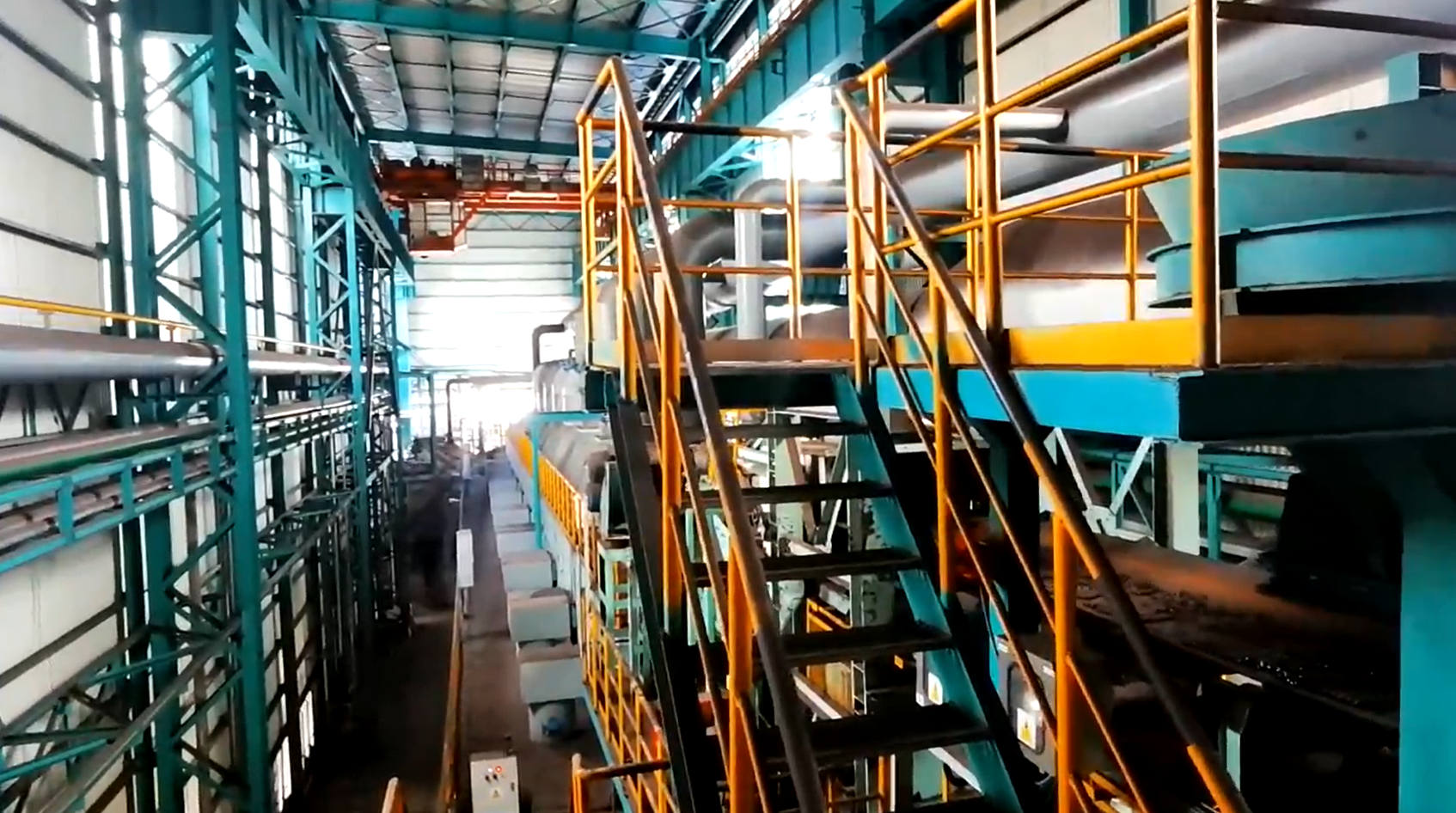
In our previous article, “Does Your Steel Dust Contain Zinc? Here’s How to Handle It“, we explored the challenges and solutions for handling zinc-containing steel dust in metallurgical recycling processes. One of the most effective routes for recovering valuable metals from this waste is the Rotary Hearth Furnace (RHF), which relies on pelletized steel dust to achieve efficient thermal processing and dezincification.
This follow-up blog dives into a frequently overlooked yet critical factor in RHF efficiency: the pulverization rate, and how it directly affects the dezincification rate. We also examine the technical parameters that influence the briquetting rate of RHF-bound materials.

What is Pulverization Rate?
Pulverization rate refers to the proportion of briquettes or pellets that break apart into fine particles (<1mm) during various stages of handling and processing. This disintegration compromises the structural integrity of the pellets and interferes with the RHF’s operational efficiency and zinc removal performance.
Here is the formula to calculate pulverization rate:

In RHF-based dezincification, pulverization occurs at two critical stages:
| Stage | Product Term | Description |
| Before RHF (agglomeration) | Briquette | Cold-pressed steel dust with binder, not yet heated |
| Inside RHF | Pellet | Heat-treated briquette undergoing reduction reactions |
1. During the Briquetting and Pre-treatment Stage
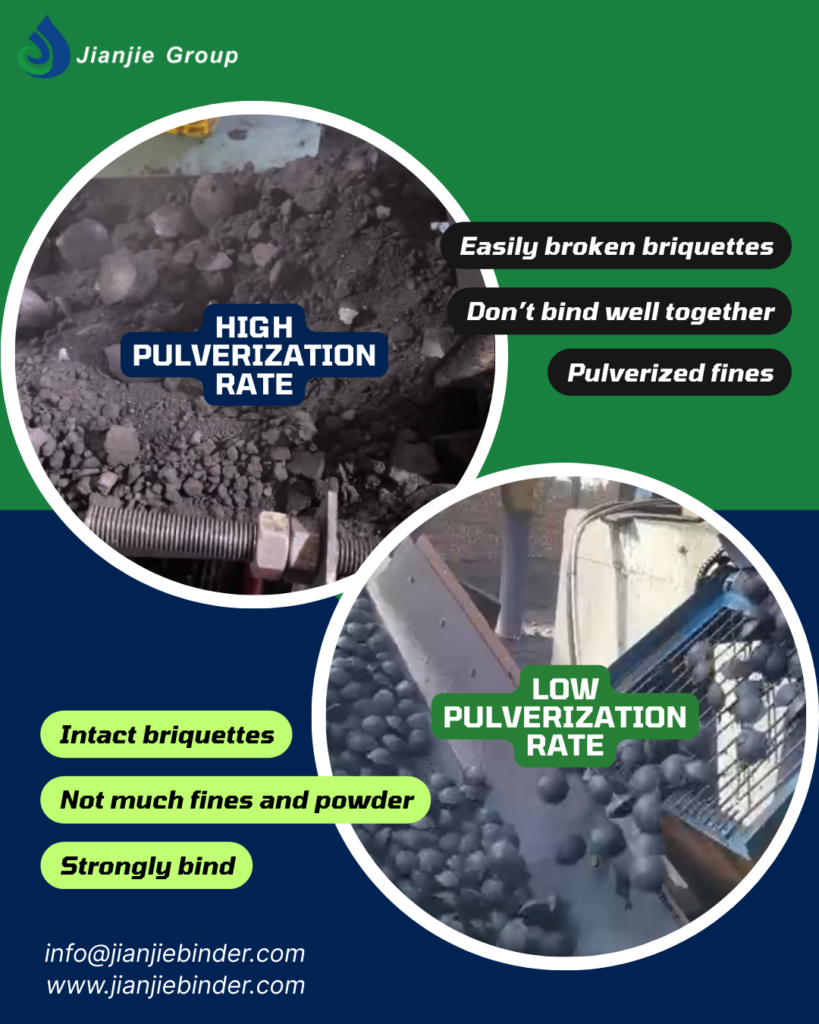
Before entering the RHF, steel dust is mixed with binder and other additives, and is compacted into briquettes using a briquetting machine. Poor mechanical strength—caused by inadequate binder, moisture imbalance, or insufficient compaction—can lead to briquette breakage during briquetting, handling or transportation. Fines generated at this stage will be returned to the prepreparation and briquetting process, increasing energy consumption and costs.
2. Inside the RHF (Thermal Processing Stage)

Once dried and fed into the RHF, briquettes undergo high-temperature reactions and transform into metallized pellets as they begin reduction. If they lack thermal stability, they may fragment under steam pressure, thermal shock, or sintering stress. Pulverization at this stage disrupts zinc removal by reducing gas-solid contact and promoting zinc vapor re-adsorption.
That’s why understanding and controlling pulverization rate is not just a quality control issue—it’s essential to achieving high dezincification efficiency in RHF operations.
But how exactly does this impact dezincification?
The Relationship Between Pulverization and Dezincification
In RHF processes, dezincification refers to the proportion of zinc removed from steel dust via reduction and volatilization at high temperatures (900-1000℃). These reactions depend on the pellet’s structure and behavior under heat.

Steel plants require a dezincification rate of ≥90% for zinc-containing dust to meet the zinc content standard (Zn < 1%) necessary for reuse in blast furnaces (BF) or basic oxygen furnaces (BOF).
Therefore, it is critical to optimize the reaction, and below are situations when these reactions are optimized:
- The pellet maintains its shape and porosity long enough for reduction to complete.
- Heat transfer into the pellet is efficient.
- Gas-solid contact is sufficient to allow zinc vapor to escape.
Moreover, high porosity of a pellet is good for dezincification as the voporized zinc can easier to effuse from the pellets. But high porosity of pellets can increase the pulverization rate (the pellets are brittle) which may hinder the mechanical strength of pellets.
Impacts of High Pulverization Rate:
- Reduced Reaction Surface Control: Fine particles clump together or sinter irregularly, leading to uneven heat distribution and incomplete reactions.
- Zinc Vapor Re-adsorption: When pellets disintegrate into fines, the surface area increases irregularly, promoting re-adsorption of zinc vapor onto adjacent particles, lowering overall removal rates.
- Dust Loss and Emissions: Fine particles may be carried away by gas flow, causing material losses and potentially higher zinc emissions in downstream gas treatment systems.
Hence, a low pulverization rate is crucial to maintaining pellet integrity, maximizing thermal efficiency, and achieving high dezincification rates in RHF operations.
Advantages of Low Pulverization Rate:
Maintaining a low pulverization rate offers several technical and operational benefits that directly improve dezincification performance
- Higher thermal efficiency: Intact pellets maintain their intended shape and porosity, allowing for more uniform heat transfer.
- Lower zinc emissions: Intact pellets with controlled porosity minimize vapor trapping and ensure cleaner separation of zinc gas from the solid matrix—resulting in more effective downstream gas treatment and lower zinc content in solid residues.
- Stable furnace operation: A higher percentage of fines can clog RHF internals or disrupt gas-solid contact zones, leading to inconsistent residence times and localized overheating or cold spots. Low pulverization ensures smoother gas flow dynamics and temperature uniformity, preserving the RHF’s thermal balance.
- Increased overall metal recovery: Strong, durable pellets enable full participation in reduction and volatilization reactions. This maximizes recovery of not only zinc, but also iron present in steel dust, contributing to higher resource efficiency and economic return.
- Less repeated briquetting process and less cost: During the briquetting step, pulverized fines will be returned to the preparation step and be fed into the briquette machine again. Less broken briquettes means that you can save the effort in repeating the work and saves energy and expenses.
Factors That Influence the Briquetting Rate for RHF
Achieving strong briquettes and pellets that resist pulverization starts at the briquetting stage. The briquetting rate/pelletizing rate (refer to the percentage of material successfully formed into high-strength briquettes/pellets) depends on several interrelated factors:
1. Binder Type and Dosage

Steel Dust Binder for RHF Dezincification
A high-performance binder is essential for providing mechanical strength and thermal stability. Jianjie’s proprietary binders, for example, are designed for high-temperature strength retention. An inadequate binder – for example, molasses binder that can’t well maintained under high temperature – can lead to fragile briquettes/pellets prone to breaking down under RHF conditions.
2. Moisture Content
Water is a necessary additive to activate certain binders and allow proper binding and compaction. However, excessive moisture can hinder drying efficiency and increase the risk of cracks or deformation during heating. The target moisture range should balance workability and drying performance. In the RHF dezincification process, the recommended moisture for briquettes is ≤2%.
3. Particle Size Distribution
A well-graded mix of fine and coarse particles leads to better compaction in the structure and help the briquette to reach ideal Blaine numbers.
Too many fines → Create dense but brittle pellets
Too many coarse particles → Reduce binding contact and mechanical strength.
Note: Different requirements toward the briquettes/pellets will pose different standards on the particle size distribution. For further inquiry about the particle size, you can contact us for support (free consultation).
4. Compaction Pressure
The forming pressure used during briquetting directly impacts strength of briquettes. Using briquette machine like double roller briquetting machine can help improve the strength (≥750N per briquette).
Higher pressure typically results in more durable briquettes, but excessive force can lead to lamination (layered structure) and internal stresses, making pellets vulnerable to thermal shock.
5. Curing and Drying Protocol
Curing (for chemical binders) and drying (for moisture removal) are vital steps. Incomplete drying can cause steam explosions in RHF, while over-drying may lead to brittleness. Controlled, gradual drying is ideal.
6. Chemical Composition of Dust
The presence of certain contents in the dust like silicon, salts, sulfur, and carboncan interfere with binder reactions or structure. Custom binder formulations may be required to address specific chemical incompatibilities.
Optimizing Pellet Quality for Superior Zinc Removal
To maximize the efficiency of dezincification in RHF, plants and operators must control both quality and process parameters. The RHF is not just a furnace—it’s a chemical reactor where pellet engineering plays a decisive role. Through optimal binder selection, process control, and raw material preparation, industries can enhance pellet robustness, ensure consistent zinc removal, and contribute to a more sustainable recycling loop.
If you’re looking to reduce pulverization, improve pellet performance, and achieve over 90% dezincification efficiency, contact Jianjie now for expert consultation and customized binder solutions tailored to your RHF application.


 English
  Arabic
  Chinese
  Russian
  Indonesian