
造粒 is a key step in producing strong, uniform pellets from iron ore fines and concentrates. The 建杰粘合剂 used in this process directly affects pellet quality, production efficiency, and overall operating costs.
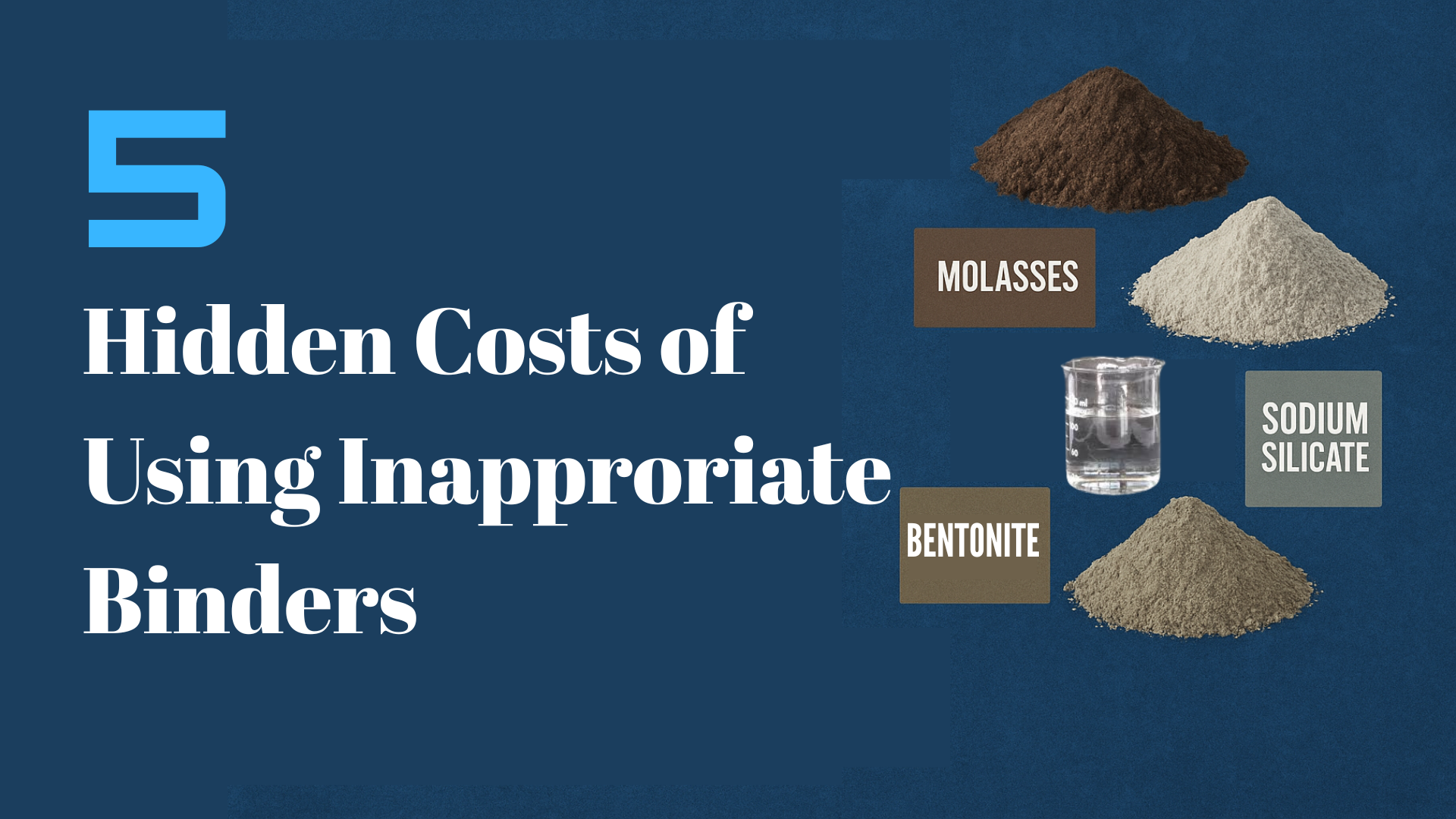
For many plants, traditional binders such as molasses, lime, sodium silicate (water glass), and bentonite remain in use due to their availability and lower purchase price. However, closer analysis reveals that these materials often introduce hidden costs that outweigh their apparent savings.
This article examines the limitations of traditional binders in pelletizing and explains why customized industrial binders are increasingly necessary for modern pelletizing operations.
1. Material Cost vs. Hidden Processing Cost
The unit price of molasses, lime, sodium silicate, or bentonite is relatively low, but the overall production impact must be considered:
- 糖蜜 and lime: Usually used along with lime to increase the properties of iron ore pellets. Requires heating or dilution for proper handling, with additional logistics for storage due to its tendency to ferment. Moreover, using molasses may lead the mixture stick to the roller which increases processing cost (e.g. cleaning and maintenance)
- Sodium Silicate: Creates strong initial bonding but demands additional drying or curing energy.
- 膨润土: Adds silica and other impurities, lowering the Fe grade of finished pellets and reducing furnace efficiency.
Takeaway: A low unit price doesn’t mean low total cost. In pelletizing, the hidden expenses of processing, rework, and efficiency losses often outweigh initial savings.
2. Limited Adaptability to Different Raw Materials
Raw materials for pelletizing vary in mineral composition and fineness. Cheap binders often perform inconsistently across different ores:
- Molasses and lime are sensitive to moisture and chemistry variations.
- Sodium silicate can create shrinkage cracks if feed composition fluctuates. Its effectiveness is strongly influenced by different iron ore compositions, leading to inconsistent pellet quality and strength.
- 膨润土 maintains bonding strength but introduces non-ferrous oxides that are undesirable in high-grade pellets.
Customized binders are formulated to match the chemistry of specific feedstocks, ensuring stable pellet quality and reducing the need for repeated process adjustments.
3. Pellet Strength and Mechanical Properties
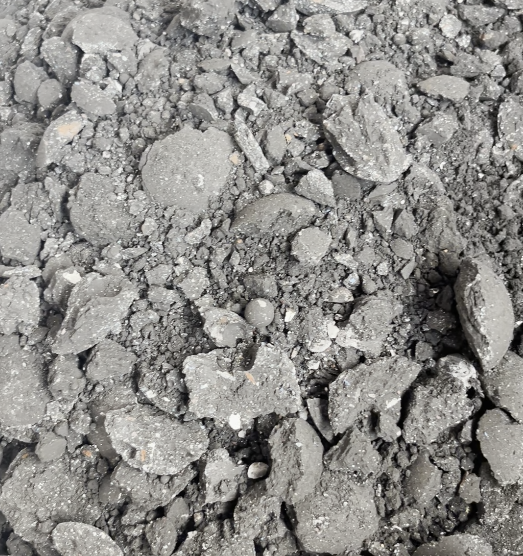
Key quality indicators such as drop times, cold compressive strength (CCS), and thermal strength are directly influenced by binder type.
- Using Molasses and Lime: Lower mechanical strength and higher powdering rate.
- Using Sodium Silicate: Strong when fresh, but prone to cracking during drying. In addition, sodium silicate binders cure relatively slowly, and curing is affected by humidity and temperature. This makes it difficult to maintain consistent pellet quality, often resulting in insufficient strength or pellet breakage.
- Using Bentonite: Mechanically stronger, but with reduced metallurgical efficiency.

Iron Ore Pellets Doing CCS Test
Customized binder systems are designed to optimize pellet strength minimizing the purity compromisation, resulting in fewer fines, better transport stability, and improved furnace permeability.
4. Environmental and Compliance Considerations
Environmental regulations are tightening worldwide, placing new requirements on pelletizing plants. Traditional binders can increase compliance risks:
Molasses and lime: Fermentation generates odor and wastewater issues.
Sodium silicate: Can complicate wastewater treatment. Its curing process is also highly energy-intensive, creating both economic and environmental challenges. The high temperatures required for proper curing significantly increase the total energy consumption of pellet production, leading to higher costs and greater carbon emissions.
Bentonite: Adds impurities that increase waste discharge.
By contrast, tailored binder solutions can be engineered to reduce volatile emissions, minimize impurities, and align with environmental standards.
5. Economic Value of High-Quality Pellets
The economic impact of binder choice extends beyond production lines:
Higher-quality pellets improve furnace efficiency, reduce energy consumption, and raise hot metal yield.
Lower-quality pellets increase reprocessing, energy costs, and downstream refining expenses.
Thus, the decision to use a low-cost binder must account for its effect on total economic value, not just initial purchase cost.
Comparisons Between Binders
| 活页夹 | Advantages | Main Limitations in Pelletizing |
| 糖蜜 | Low purchase price, partly renewable | Fermentation risk, poor strength, high fines, sticky |
| 硅酸钠 | Strong bonding, easy to transport | Higher energy cost, shrinkage cracks, wastewater impact |
| 膨润土 | Help make strong pellets, easy handling | Reduces Fe grade, adds impurities |
Jianjie’s Customized Binder Solutions and Technical Support
As pelletizing operations evolve, many plants face the challenge of balancing cost efficiency with quality, adaptability, and compliance. Recognizing these needs, Jianjie provides customized binder solutions tailored to specific raw materials and production conditions.
Jianjie’s approach goes beyond supplying binders:
Customized Formulations – Binder chemistry is adjusted based on ore composition, fineness, and production parameters to ensure consistent pellet quality.
Technical Support – A dedicated technical team works with clients to analyze raw materials, conduct laboratory trials, and optimize binder dosage for maximum efficiency.
Sustainable Solutions – Formulations are designed to reduce energy use, minimize impurities, and meet increasingly strict environmental standards.
End-to-End Service – From raw material testing to full-scale industrial application, Jianjie provides guidance throughout the pelletizing process.
This combination of advanced binder technology and hands-on technical support enables pellet plants to achieve higher pellet strength, lower operating costs, and improved sustainability.
摘要
While molasses, lime, sodium silicate, and bentonite remain widely used in pelletizing, their hidden costs—in processing, adaptability, pellet quality, and compliance—are increasingly difficult to ignore.
Customized binder solutions, such as those developed by Jianjie, are designed to address these challenges by:
- Matching binder chemistry to specific ore types.
- Enhancing pellet strength while maintaining metallurgical purity.
- Reducing environmental impact and waste discharge.
- Optimizing total production economics.
In modern pelletizing, binder selection is no longer just about material cost—it is about ensuring stable quality, compliance, and long-term efficiency. Customized binders are therefore not an additional expense, but a strategic investment in sustainable production.
Are you looking for the right binder formulation that fits your raw material and equipment? Contact us now for 1-on-1 professional consultation and customized solution!

 Chinese
  English
  Arabic
  Russian
  Indonesian