
When it comes to briquette production, choosing the right binder can make or break your operation. Molasses binder might seem like an attractive option — it’s natural, relatively cheap, and widely available. However, during the real application, this sweet-sounding binder comes with a series of problems that could compromise your briquettes’ quality in strength, durability, and long-term performance.
In this article, we’ll explore what molasses binder is, why it’s not the best choice for industrial 压块, and what smarter alternatives you should consider.
What Is Molasses Binder?
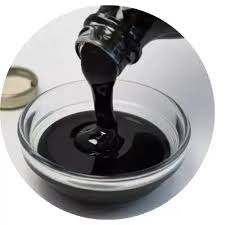
Molasses is a thick, syrupy by-product from sugar refining, commonly derived from sugarcane or sugar beets. It is widely used in food, animals’ forage, and industrial use. Moreover, it’s long been used as a binder in briquetting, particularly in charcoal and coke production (binder for coke powder), thanks to its sticky texture and organic nature.
On paper, it sounds ideal: a natural by-product that helps hold briquette particles together. However, with the increasingly stringent requirements toward binder, molasses have been put away in many industrial plants .

Mix molasses binder with raw material
How Molasses Binder Works in Briquetting
When used as a binder, molasses is typically mixed with lime to bind particles like charcoal, coke breeze, some ores, or waste in steel process. The syrup coats the particles, acting as a glue during the pressing process. After drying or curing, the molasses hardens — temporarily giving shape and form to the briquette.
The Hidden Problems with Molasses Binder
Despite its low upfront cost and natural origins, molasses binder presents several serious drawbacks:
1. Weak Mechanical Strength – High Pulverization Rate
Molasses-bound briquettes often suffer from poor compressive strength. They’re prone to cracking, breaking, or crumbling during handling, shipping, or storage — leading to material loss and lower product quality.
2. Poor Thermal Stability
Molasses binders perform poorly under high temperatures. In industrial applications where heat resistance is critical, molasses-bound briquettes will deform, weakening their structure and usefulness.
3. Inconsistent Quality
Molasses composition can vary depending on the sugar source and refining process. This inconsistency leads to fluctuating binding performance, making quality control difficult.
4. Inconsistent Production
Molasses tends to stick to roller surfaces during the process of briquette forming, leading to equipment blockages and unplanned downtime.
5. Environmental and Practical Issues – Bad for Your Health
Molasses emits a strong odor, is sticky to handle, and can attract insects or pests. Long-term exposure to its fumes may also pose health risks for workers.
6. Inconvenient to Use
Unlike powdery binders, molasses is a viscous liquid that’s harder to store, measure, and mix uniformly.
7. High Dosage Requirement
Molasses typically requires a high addition rate — often 8% or more — to achieve acceptable strength. This increases the binder cost per ton of briquettes.
Better Alternatives to Molasses Binder: Why Jianjie’s Composte Binder Stands Out
Watch the Video Blow: Which Binder Works Better?
https://www.youtube.com/embed/cD9NV6yZ3d8
For producers seeking consistent quality, strong performance, and sustainable credentials, Jianjie’s plant-based composite binder offers a powerful alternative. Here’s why it outperforms molasses on every front:
Biodegradable and Clean
Jianjie Binder naturally decomposes over time and leaves behind no harmful residue. It is ideal for operations with environmental compliance goals. It also emits no toxins during processing, making it safer for workers and surrounding communities.
Superior Strength and Durability
With high wet strength and cold compressive strength (CCS), Jianjie composite binder ensures that briquettes remain intact during handling, storage, and transport — even in challenging environments.
Low Ash Content
The low ash profile of Jianjie composite binder makes storage, shipping, and downstream processing cleaner and more efficient.
Cost-Effective Dosage
According to real test result and our previous experience, Only 3–5% composite binder is needed to achieve outstanding performance, making it economical even compared to “cheap” molasses.
High Forming Rate and Long-Term Stability
Briquettes formed with Jianjie’s binder can well maintain their shape and integrity over time, even during long-term storage or exposure to varying conditions.
摘要
Molasses may have its place in small-scale or traditional briquetting, but for today’s industrial needs, it falls short from weak strength to operational hazards and health concerns.
Jianjie, by contrast, delivers long-term value through strong performance, ease of use, and sustainability — all at a competitive cost. Jianjie binder has been trusted by hundreds of clients for over 15 years.
If you are interested in replacing molasses and lime with a more effective, high-heat resistant, and odor-free binder, contact us now for free sample!


 Chinese
  English
  Arabic
  Russian
  Indonesian