
What is Dedusting Ash?
Dedusting ash, also referred to as steel dust, iron-bearing dust, or by specific names such as EAF dust and converter dust, is the fine particulate matter collected from various stages of steel production using dust removal systems such as bag filters, electrostatic precipitators, or scrubbers. This dust mainly consists of iron-rich oxide particles, along with varying amounts of zinc, lead, alkalis, and other compounds. Although it has traditionally been treated as solid waste, dedusting ash is now increasingly recognized for its resource potential. Its high iron and zinc content makes it a valuable material for recycling in steelmaking and related industries.

A thorough understanding of the composition and origin of dedusting ash is fundamental to assessing its potential as a valuable resource. This foundation enables a clearer perspective on the volume of dust generated throughout steel production and highlights the technical opportunities and challenges associated with its effective recycling.
The Hidden Resource in Dedusting Ash
Although often treated as waste, dedusting ash, a major form of iron-bearing dust, contains up to around 60% iron oxide, making it a valuable secondary resource. Steel production generates significant volumes of dust at every major stage. According to industry data:
- Sintering produces 0.9 to 15 kg of dust per ton of sinter
- Blast furnace emits 9 to 22 kg per ton of hot metal
- Converter generates 9 to 15 kg per ton of crude steel (converter dust)
- Electric arc furnace (EAF) releases 16 to 20 kg per ton of crude steel (EAF dust)
However, the ultra-fine particle size and complex composition of this steel dust pose challenges for direct reuse. This article explores its classification, technical hurdles, and practical steel dust recycling methods such as cold briquetting and rotary hearth furnace (RHF) reduction.
| Components in Dedusting Ash/Steel Dust (%) | |||||||||
| Dust Type | TFe | CaO | SiO2 | MgO | Zn | C | Al2O3 | Na2O | Pb |
| Sintering Dust | 23.1 | 11.0 | 3.2 | 1.5 | 0.5 | 10.0 | 1.5 | 2.24 | 2.15 |
| Blast Furnace Dust | 24.2 | 3.5 | 2 | 4.2 | 6.7 | 33.3 | 1.9 | 0.63 | 0.15 |
| Converter Dust | 60.7 | 10.5 | 4.4 | 2.5 | 0.11 | 1.6 | 1.7 | 0.43 | 0.03 |
| EAF Dust | ~36 | ~25 | ~2 | ~4 | |||||
The Origins and Types of Dedusting Ash
Dedusting ash can be categorized in two primary ways: by production process and by dust collection system.
By Production Process
| Dust Type | Source | Color | Bulk Density | Key Elements |
| Sintering Dust | Sinter flue gas | Gray-white | 1.2g/cm³ | Fe, K, Na, Cl |
| Blast Furnace Dust | Top-gas via baghouse | Dark gray | 0.75g/cm³ | Fe, C |
| Converter Dust | Converter off-gas | Grayish red | 0.84–1.5 g/cm³ | Fe, Ca, Mn |
| EAF Dust | Scrap melting | Variable | 1.1-2.5g/cm³ | Fe, Zn, Pb, Cl |
By Dust Collection System
Flue Gas Dedusting Ash: Collected at high temperatures during steel production. Its composition is often complex and varies by stage.
Environmental Dedusting Ash: Captured through ambient-temperature electrostatic systems. Chemically stable and more recyclable.
Why Is Fine Dusting Ash Difficult to Recycle?
From a technical perspective, dedusting ash presents multiple processing challenges:
- Extremely Fine Particles: Particles smaller than 100 μm exhibit low inertia, (particles are easier to be moved), resulting in poor bonding and weak briquette structure.
- Porosity Sensitivity: Porosity has a critical impact on briquette quality. High porosity leads to low density and poor mechanical strength, making briquettes prone to breakage during drying, transport, or furnace charging. Conversely, excessively low porosity can reduce internal reaction surface area and hinder binder penetration, negatively affecting reduction efficiency.
- Binder Distribution: Fine particles are difficult to coat evenly. Overuse of binder increases cost and slag rate; underuse reduces cohesion.
- Thermal Risks: Zn, Pb, Cl, and alkalis can vaporize in furnaces, causing slagging, gas flow disruption, and refractory wear. These risks significantly limit the direct reuse of fine dust in traditional high-temperature operations. However, specialized thermal reduction methods such as Rotary Hearth Furnace (RHF) technology offer a targeted solution to remove/recycle these volatile elements(Zn) while recovering valuable metals (Fe).
Recovery Solutions for Dedusting Ash: Cold Briquetting and RHF Reduction
Cold Briquetting:
冷压块 is a widely used method for steel dust recycling, particularly for handling iron-bearing dust such as converter dust and EAF dust.Usually, It involves combining 2-3 or more raw materials such as dedusting ash with other iron-rich residues like iron oxide powder or converter sludge, or more with binder. The mixture is compacted into briquettes at room temperature without the need for thermal input.

Advantages of Briquetting Steel Dust:
- Simple process with low energy consumption (no heating required)
- Cost-effective solution for reusing Iron-bearing dust and other iron-rich waste
- Adaptable to existing production lines with minimal modification
Limitations:
- Briquettes may have reduced strength at high temperatures using improper binderResidual impurities such as Zn or Cl may accumulate in the furnace if not properly managed
- Cold briquetting is best suited for iron-bearing materials with moderate impurity levels and applications that do not require high-temperature performance.
- For steel dust streams containing high concentrations of volatile metals such as zinc, rotary hearth furnace (RHF) reduction is is then brought to the game.
RHF Reduction:
Steel dust contains elements such as Zn, K, and Na. If directly returned to the sintering process, it can lead to a decline in sinter quality, affect the stable operation of the blast furnace, and shorten its service life. The accumulation and circulation of zinc can cause accretions inside the furnace and tuyere damage, resulting in elevated top gas temperatures and seriously impacting production. Therefore, de-zincing treatment is necessary. By mixing zinc-containing steel dust with carbonaceous materials and cold briquetting them using a binder, carbon-containing pellets can be produced and fed into a rotary hearth furnace (RHF), where they are directly reduced into metallized pellets. After the removal of harmful impurities, these pellets can be reused in the blast furnace.
Advantages of RHF Reduction:
- Separates and captures volatile metals like zinc for secondary recovery
- Achieves high metallization rates (up to 70%) in the resulting metallic pellets
- Enables direct reuse of metallic pellets in blast furnaces or basic oxygen furnaces
- Reduces internal circulation of harmful elements, enhancing furnace stability
Technical Considerations for Effective Dedusting Ash Recycling
To ensure high-quality briquette formation and efficient metal recovery, several technical factors must be precisely controlled throughout the cold briquetting and RHF reduction stages:
压块
Particle Size Management: Fine dust with particles smaller than 100 μm can hinder densification. Proper particle size adjustment improves compaction and briquette strength.
Binder Selection: Choosing a binder with the right thermal stability and binding performance helps enhance green strength and prevents disintegration during heating.
Uniform Mixing: Ensures consistent binder distribution, avoids weak points in briquettes, and improves metallurgical performance.
Accurate Material Ratio Control: Precise blending of iron-bearing dust, binder, and reductant is essential to ensure reduction completeness and pellet stability.

RHF Process Capabilities That Support Efficient Metal Recovery
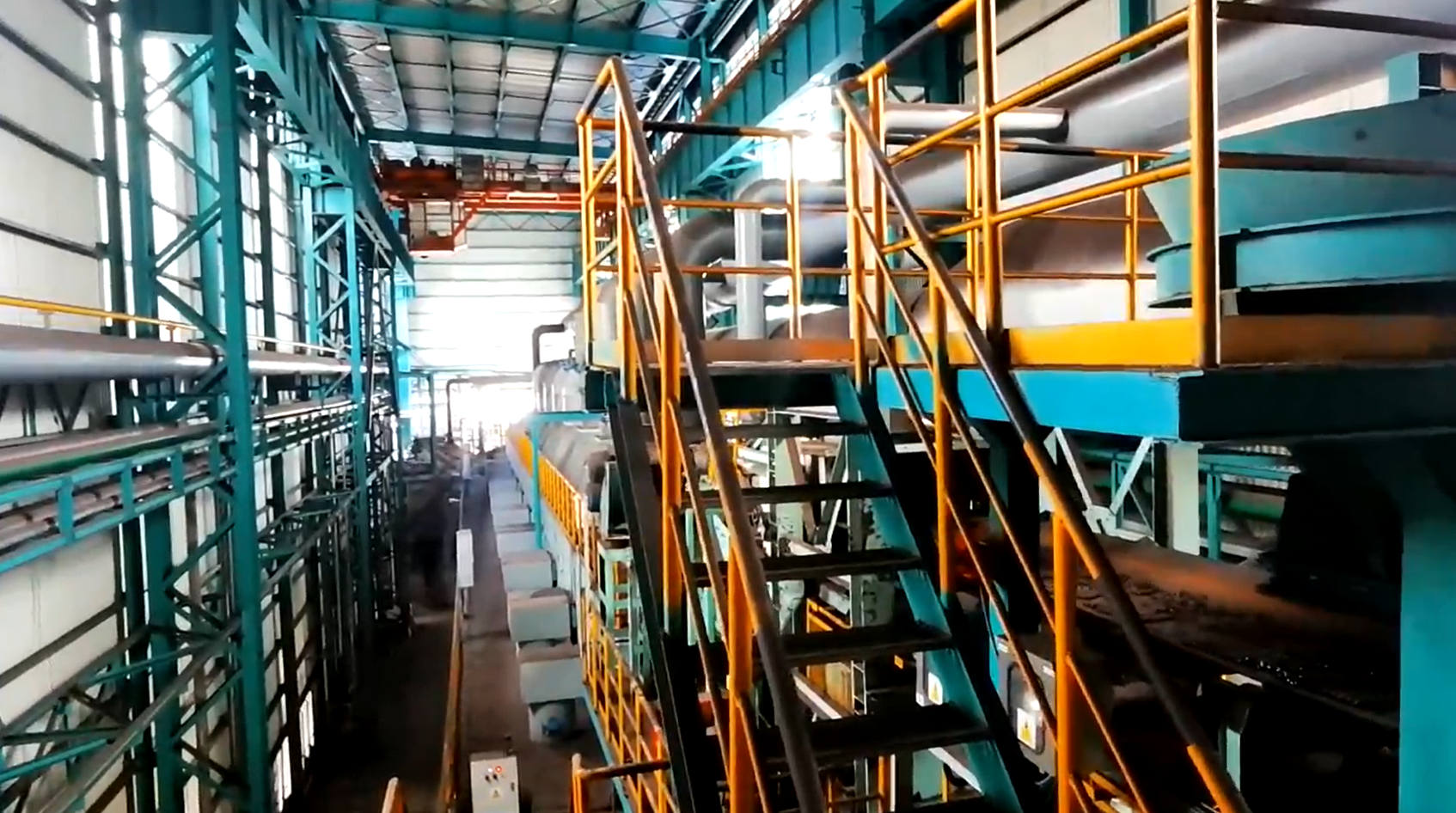
The rotary hearth furnace (RHF) is a core technology enabling high-efficiency recycling of dedusting ash. While not external technical barriers, its features directly contribute to successful metal extraction:
Multi-Stage Thermal Treatment: The RHF process includes drying, preheating, reduction, discharge, and cooling. Each stage supports the structural integrity of the briquettes and allows gradual thermal exposure to avoid cracking or disintegration.
Integrated Energy Recovery: Waste heat from the furnace is reused to preheat combustion air and dry incoming materials. This closed-loop design boosts energy efficiency and lowers operational costs.
Zinc-Rich Dust Collection: As volatile elements like Zn vaporize during reduction, the RHF system captures these in dedicated filtration units, allowing secondary recovery for non-ferrous metallurgy and reducing impurity buildup in the steelmaking cycle.
Jianjie Group’ s Integrated Dedusting Ash Recycling Solution
With nearly two decades of experience in steel dust recycling, Jianjie Group provides end-to-end recycling solutions for dedusting ash, combining advanced binder technology and rotary hearth furnace (RHF) engineering.
Tailored binder for briquetting is formulated based on dedusting ash properties such as moisture content, particle size, and impurity profile

Thermally stable binder options are available for treating high-Zn EAF dust and converter dust
Cold Briquetting Support
- Engineering design and equipment selection for cold briquetting lines, including mixers, high-pressure roller presses, and drying systems
- Binder-to-material ratio optimization to improve briquette strength and reduce binder cost
- Process adaptation for different feedstocks such as converter dust, mill scale, or iron oxide powder
- On-site support for process calibration, material flow control, and briquette quality assessment
RHF Process Engineering Support:
- Mixing: Iron-bearing dust is blended with the binder and reductant (such as coal powder)
- 压块 and Drying: The mixture is formed using high-pressure roller presses and moisture is removed
- Heating: The rotary hearth furnace operates at 1000 to 1300°C, achieving efficient RHF reduction of the briquettes within 15 to 20 minutes, Jianjie binder can resist high heat and help briquettes to remain intact under high temeprature
- Recovery: The process yields metallized pellets for reuse and captures volatile elements like zinc in dust form, enabling closed-loop recycling.
Energy Optimization:
In addition, Jianjie’s high-strength briquettes remain structurally stable during thermal processing, helping to reduce return materials and improve reduction efficiency, whichindirectly lowers energy consumption. These high-quality briquettes also allow customers to better utilize their existing waste heat systems for material drying and energy savings.
Technical Services:
- The full service includes material analysis, lab-scale cold briquetting trials, on-site testing, and production scaling
- Jianjie also offers guidance on equipment selection, parameter optimization, and long-term quality monitoring

Transforming Dedusting Ash into Opportunity
Dedusting ash is no longer just a byproduct. As a form of steel dust, it represents a valuable resource waiting to be unlocked. By understanding the classification of dedusting ash, addressing the technical challenges of handling ultra-fine iron-bearing dust, and applying tailored steel dust recycling solutions, steelmakers can recover valuable metals, reduce environmental impact, and improve operational efficiency.
Jianjie Group is ready to help you transform EAF dust, converter dust, and other forms of Iron-bearing dust into high-performance briquettes. Contact us today for lab testing or a customized steel dust recycling strategy tailored to your materials.


 Chinese
  English
  Arabic
  Russian
  Indonesian